Most Homes Have Worse Air Than the Street Outside. Here’s What to Do About It.
The EPA has reported that indoor air is often two to five times more polluted than outdoor air. Sometimes worse. That number surprises people. We think of air pollution as a city problem, a car exhaust and factory smoke problem. But the air inside a sealed, modern home carries its own load: dust mite debris, pet dander, mold spores, VOCs from cleaning products and furniture, and whatever drifts in through gaps around windows and doors.
In Berks County, we deal with a specific mix of seasonal air quality challenges. Spring brings pollen counts that can be brutal for allergy sufferers. Summer brings humidity that, left unchecked, creates the conditions mold needs to thrive. Winter means tightly sealed homes with recirculating air and no natural ventilation.
We get a lot of questions about air quality from homeowners who are sneezing more, dealing with chronic congestion, or just noticing that musty smell they can’t quite trace. This is what we actually tell them.
Start With Your Filter Before Buying Anything Else
The single most cost-effective air quality upgrade in most homes costs about twenty dollars. Upgrading from a basic fiberglass filter to a high-quality pleated filter with a MERV rating between 8 and 13 makes a real, measurable difference in what circulates through your ductwork.
MERV stands for Minimum Efficiency Reporting Value. Higher numbers mean finer filtration. A MERV 8 to 11 filter captures most dust, pollen, pet dander, and mold spores without restricting airflow enough to strain your system. MERV 13 filters get into capturing bacteria and some virus carriers, which became a bigger topic for homeowners after 2020 and has stayed relevant.
Here’s the catch with high-MERV filters: they need to be changed more frequently, typically every 30 to 60 days for households with pets or allergy sufferers. A MERV 13 filter that’s been in place for six months becomes a restriction that hurts your system and stops doing its job. The filter is only as good as the schedule you keep.
This is worth getting right before spending money on add-on equipment. I’ve been in homes where the filter upgrade alone solved 80% of the family’s complaints.
Whole-Home Air Purifiers: Worth It or Marketing?
Honest answer: it depends on what you’re dealing with and what type of system you’re considering.
Portable room air purifiers can work well for a single bedroom or living area. A quality unit with a true HEPA filter and activated carbon layer will clean the air in a 300 to 500 square foot space effectively. Brands like Coway and Winix consistently rate well in independent testing. But a portable unit treats one room, and most homes have more than one room.
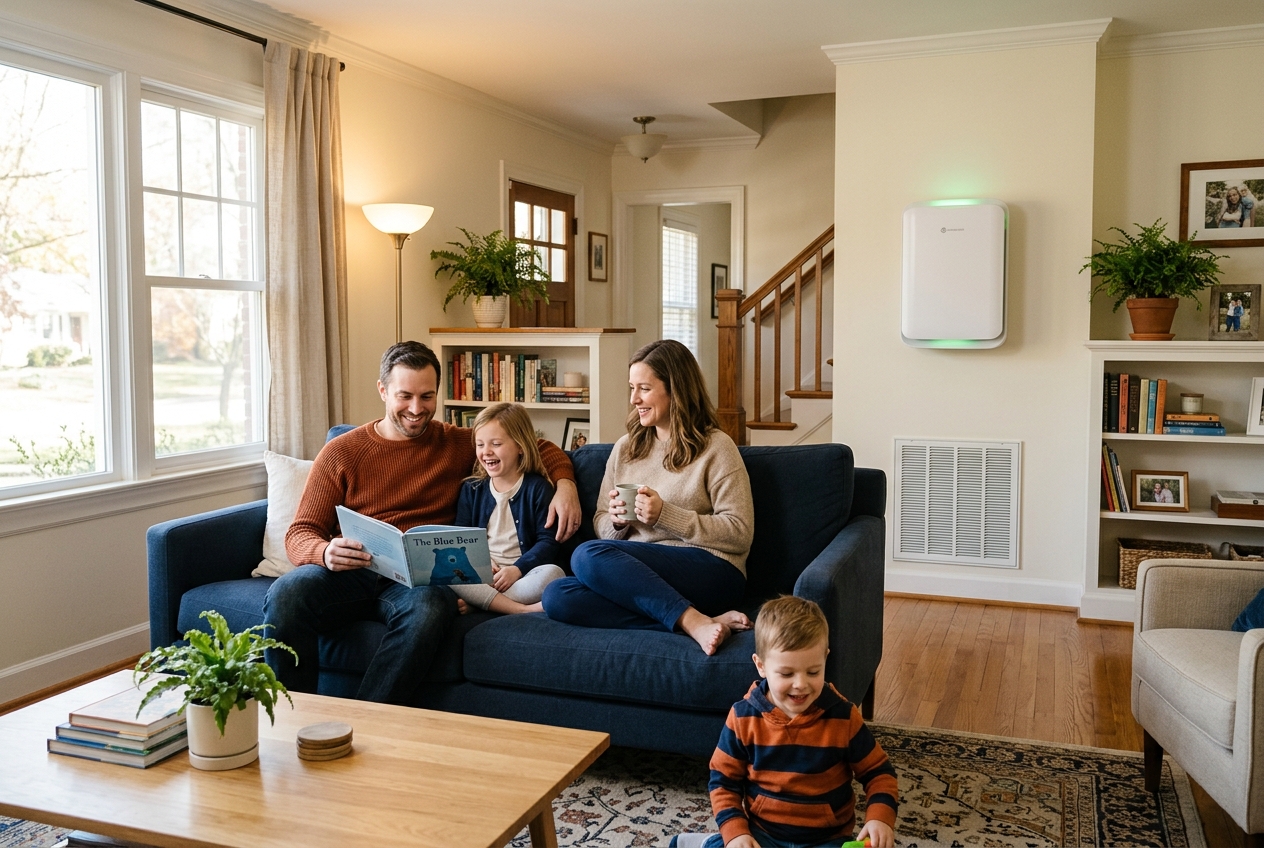
Whole-home systems installed directly into your HVAC ductwork are a different category. These include electronic air cleaners, media air cleaners, and UV germicidal lights. When properly sized and installed, a whole-home air cleaner works on every cubic foot of air that moves through your system.
UV light systems deserve a separate mention. They’re installed near the evaporator coil and use ultraviolet light to neutralize mold, bacteria, and some viruses on contact. They don’t filter particles the way a pleated filter does, but they’re effective at controlling biological growth inside the air handler itself. We often recommend them in combination with a high-MERV filter rather than as a standalone solution.
If you’re unsure what’s right for your home, reach out to us for a free assessment. The right setup depends on your home’s square footage, your duct configuration, and what specific concerns you’re trying to address.
Humidity Is the Air Quality Variable Most People Ignore
This one matters more than most homeowners realize.
Relative humidity above 60% creates conditions where mold and dust mites thrive. Below 30%, you get dry air that irritates mucous membranes, worsens respiratory symptoms, and causes static electricity and wood shrinkage. The target range for a healthy home is 40 to 55%.
In Pennsylvania, summer humidity is a real issue. A well-functioning central AC system dehumidifies as it cools, but it can only do so much. Homes that are partially cooled, or that have areas the AC doesn’t reach well, often have humidity problems that fuel mold growth inside walls, under carpets, and in basements.
A whole-home dehumidifier installed in the HVAC system is a significant upgrade for homes that struggle with this. It works independently of the cooling cycle, so it keeps humidity controlled even on mild days when the AC isn’t running often.
If your basement smells musty in summer, your family notices more allergy symptoms in July and August than in spring, or you’ve found mold in a bathroom or closet more than once, humidity is worth investigating seriously.
Ventilation: The Part of Air Quality Nobody Talks About
Modern homes are built tight. That’s good for energy efficiency and bad for fresh air exchange. Without intentional ventilation, the same air just keeps recirculating, accumulating pollutants over time.
Energy Recovery Ventilators, called ERVs, solve this problem elegantly. They bring fresh outdoor air into the home while exhausting stale indoor air, and they do it in a way that transfers heat and humidity between the two airstreams. In winter, the incoming cold air is pre-warmed by the outgoing warm air. In summer, the reverse happens. You get fresh air without throwing away all the energy you spent conditioning the indoor air.
ERVs are standard in new high-performance homes and retrofit well into existing duct systems. They’re not a product most HVAC companies lead with, but we’ve installed them in several Berks County homes and the homeowners notice the difference immediately in how fresh the air feels.
What We Actually Recommend
Here’s the practical path for most homes. Start with the filter. Upgrade to a MERV 10 or 11 pleated filter and change it every 45 to 60 days. Add a UV light system if you’ve had mold issues or want better biological protection. Consider a whole-home dehumidifier if summer humidity is a consistent problem. If you’re building or doing a major renovation, design ventilation in from the start.
None of this requires a massive upfront investment done all at once. Good air quality is something you can improve in stages.
Our HVAC services page covers the air quality solutions we install and service throughout Berks County and the surrounding area. We’re happy to walk through your home, talk through what we see, and give you a straight answer on what’s worth doing and what isn’t.