
When One Slow Drain Becomes Three, Something Bigger Is Going On
Most homeowners ignore a slow drain for a while. It drains, just slowly. You run the water, it pools for a moment, then clears. Easy to put off.
But here’s what I’ve learned after years of plumbing calls in Berks County: a single slow drain is usually a localized clog. Soap buildup in the bathroom sink, hair in the shower. Those are easy fixes. When multiple drains in your home start running slow at the same time, or when the problem keeps coming back after you’ve snaked it yourself, the cause is almost always further downstream. And the fix needs to match the actual problem, not just the symptom.
This post covers what actually causes widespread slow drainage, what you can safely try at home, and the situations where a professional drain cleaning or inspection is the only real answer.
Single Drain Slow vs. Multiple Drains Slow: Not the Same Problem
The distinction matters.
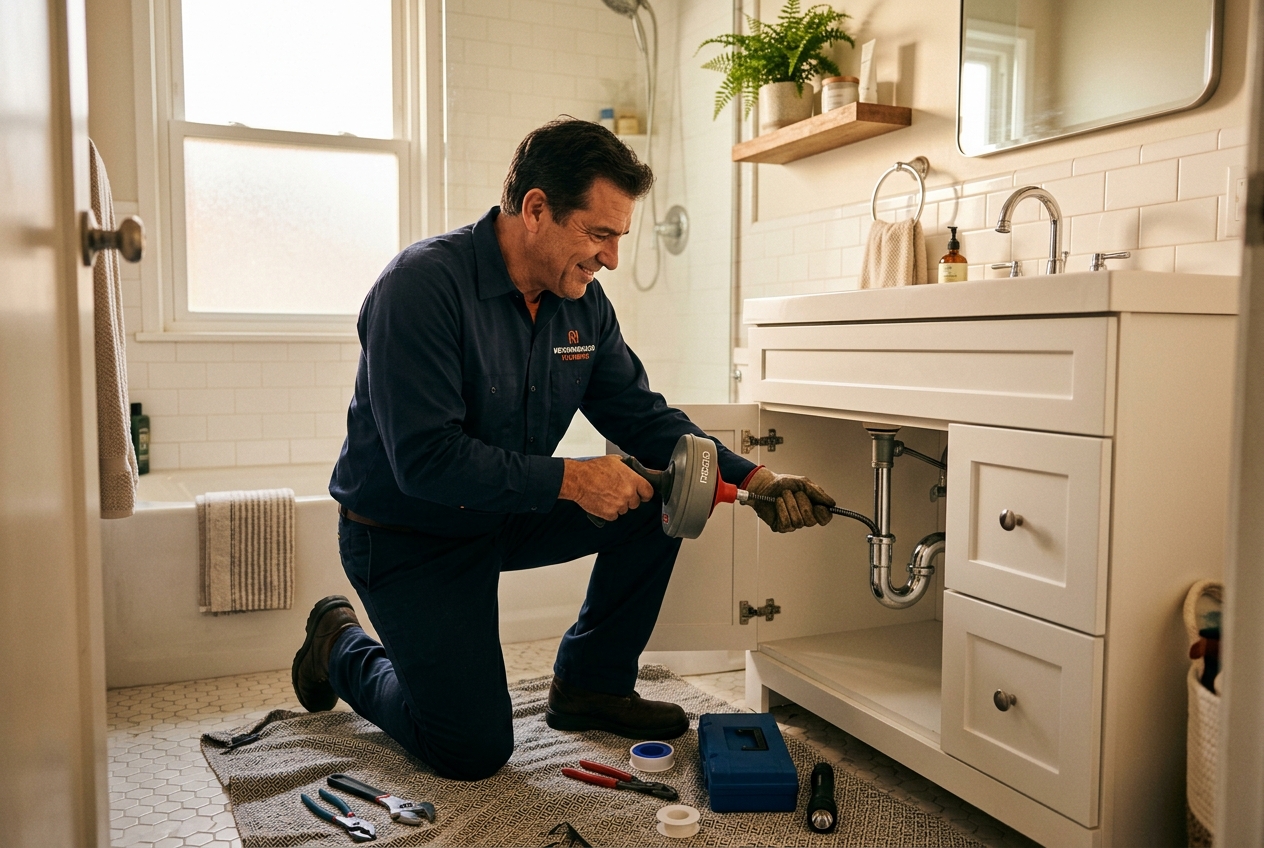
A single slow drain, say the bathroom sink, is almost always a local blockage. Hair, soap scum, and toothpaste residue accumulate in the P-trap or the upper section of the drain pipe. A drain snake or a cleaning tool that removes the buildup by hand solves it most of the time. Liquid drain cleaners like Drano can help for minor buildup, but the American Society of Home Inspectors and most plumbers advise against using them regularly because they can degrade certain pipe materials over time and don’t actually clear solid obstructions.
Multiple slow drains, especially in different parts of the house, point to the main drain line or sewer line. That’s the large-diameter pipe that everything in your home feeds into before connecting to the municipal sewer or your septic system. A partial blockage there slows everything. A complete blockage causes sewage backup, which is exactly as bad as it sounds.
If your kitchen sink, a bathroom drain, and a shower are all sluggish at the same time, don’t treat each one separately. The problem is shared.
What Builds Up in Main Sewer Lines
Grease is the biggest offender, especially in older homes.
Fats, oils, and cooking grease go down the drain as a liquid and cool as they travel through the pipe. They solidify on the pipe walls, accumulate over years, and eventually restrict flow. This is slow, gradual, and usually invisible until the buildup reaches the point where everything upstairs starts draining poorly. It’s also why drain problems often get worse in winter: cold temperatures firm up grease buildup faster.
Tree roots are a close second. Pennsylvania has no shortage of mature trees, and their roots seek moisture. Old clay or cast iron sewer lines develop small cracks over decades, and roots find those cracks. A root intrusion that starts small can grow into a full blockage over a few years. We’ve pulled root masses the size of a basketball out of sewer lines in Berks County homes.
In older homes, pipe scale and deterioration are also real factors. Cast iron pipes corrode from the inside. The rough interior surface catches debris more easily than a smooth pipe, and eventually sections can collapse or offset at the joints. This isn’t something a drain snake fixes. It often requires pipe replacement or relining.
What You Can Try Before Calling Us
For a single slow drain, try a drain snake or a hair removal tool before reaching for chemicals. These are inexpensive and available at any hardware store. Getting physical with the clog clears it more thoroughly than a liquid treatment.
For multiple slow drains, there’s one thing worth checking first: your clean-out access point. Most homes have a clean-out cap near the foundation or outside where the main drain exits the house. If you can locate it and the cap is accessible, remove it carefully. If water immediately flows out of the clean-out when you open it, that tells you the blockage is between the clean-out and the street, meaning it’s in the main line or sewer line.
That’s the point where a home remedy stops being appropriate. You need a professional drain cleaning with a motorized snake or hydro-jetting equipment, and ideally a camera inspection to see exactly what you’re dealing with.
The Hydro-Jetting Difference
A standard drain snake breaks through clogs and pulls them out. That works for many situations. But for grease buildup, heavy root intrusion, or years of accumulated scale, hydro-jetting is a different level of clean.
Hydro-jetting uses highly pressurized water, typically between 1,500 and 4,000 PSI, to scour the interior walls of the pipe. It doesn’t just punch through the clog; it removes the buildup clinging to the sides. After a hydro-jet cleaning, the pipe flows the way it’s supposed to, not just better than it did before.
The National Association of Plumbing-Heating-Cooling Contractors recognizes hydro-jetting as the standard of care for sewer line maintenance in older residential properties. We use it regularly for Berks County homes dealing with chronic slow drainage that keeps coming back.
Sewer Camera Inspections: Stop Guessing
If your drains have been slow more than twice in the past year, or you’ve had a professional snake it and the problem returned within a few months, a camera inspection is the right next step.
A sewer camera is a small, waterproof camera mounted on a flexible cable that travels through your drain lines. We can see in real time what’s inside the pipe: grease buildup, root intrusion, a cracked section, an offset joint, or a belly in the line where debris pools. That information tells us exactly what the fix needs to be, instead of guessing and treating symptoms.
Camera inspections are also valuable if you’re buying a home. A house that passes a general inspection can still have a main drain line that’s half-blocked with roots or a corroded section that’s one heavy rain away from a backup.
One More Thing Worth Mentioning
Foul odors coming from drains, even when they’re draining fine, are a separate clue. Sewer gas smell, that rotten egg sulfur odor, can mean a dried-out P-trap (common in unused fixtures), a cracked vent pipe, or a more serious issue with sewer gas entering the home. It’s worth taking seriously. Sewer gases are not just unpleasant; at certain concentrations they’re harmful.
If you’re dealing with persistent slow drains, recurring clogs, multiple fixtures backing up, or sewer odors anywhere in your home, contact Kodiak Comfort and let us take a look. We handle drain cleaning and full plumbing service throughout Berks County, and we’ll tell you straight what the problem is and what it actually takes to fix it. No smoke and mirrors, just honest work.
Check out our plumbing services to see the full range of what we do, and call us if the drains aren’t waiting.