When the first real cold snap hits Berks County, our phones start ringing with the same call: “No water is coming out of the faucet.” A frozen pipe is a nuisance. A frozen pipe that bursts can put hundreds of gallons of water into a basement, wall or ceiling before anyone notices. The good news is that most frozen pipes are preventable, and the ones that do freeze can usually be thawed safely if you act quickly.
Why pipes freeze in Berks County homes
Pipes freeze when the water inside them sits in a cold space long enough to turn to ice. In our area, the usual trouble spots are:
- Exterior walls, especially kitchen and bathroom plumbing on the north side of the house
- Unheated basements, crawl spaces and garages
- Older twins, row homes and farmhouses with little insulation around plumbing runs
- Outdoor hose bibs that weren’t shut off and drained in the fall
- Homes with a heating problem. If the furnace or boiler quits overnight, every pipe in the house is at risk.
How to prevent frozen pipes
- Keep the heat on, even when you’re away. Don’t set the thermostat below about 55°F, even for a weekend trip.
- Open cabinet doors under sinks on exterior walls so warm room air reaches the pipes.
- Let a faucet drip on the coldest nights. Moving water is much harder to freeze, and a drip relieves pressure if ice starts to form.
- Shut off and drain outdoor spigots. Close the inside shutoff valve, open the outside faucet, and disconnect hoses.
- Insulate exposed pipes in basements, crawl spaces and garages with foam pipe sleeves.
- Seal drafts where cold air blows in near plumbing, such as around dryer vents, sill plates and old basement windows.
- Get your heating system checked. The most common cause of a whole-house freeze-up is a furnace or boiler that stops running in the middle of the night.
Signs a pipe is frozen
- Little or no water from a faucet when it’s below freezing outside
- Frost on a visible pipe
- A toilet that won’t refill
- Strange smells from a drain, or gurgling sounds
What to do if a pipe freezes
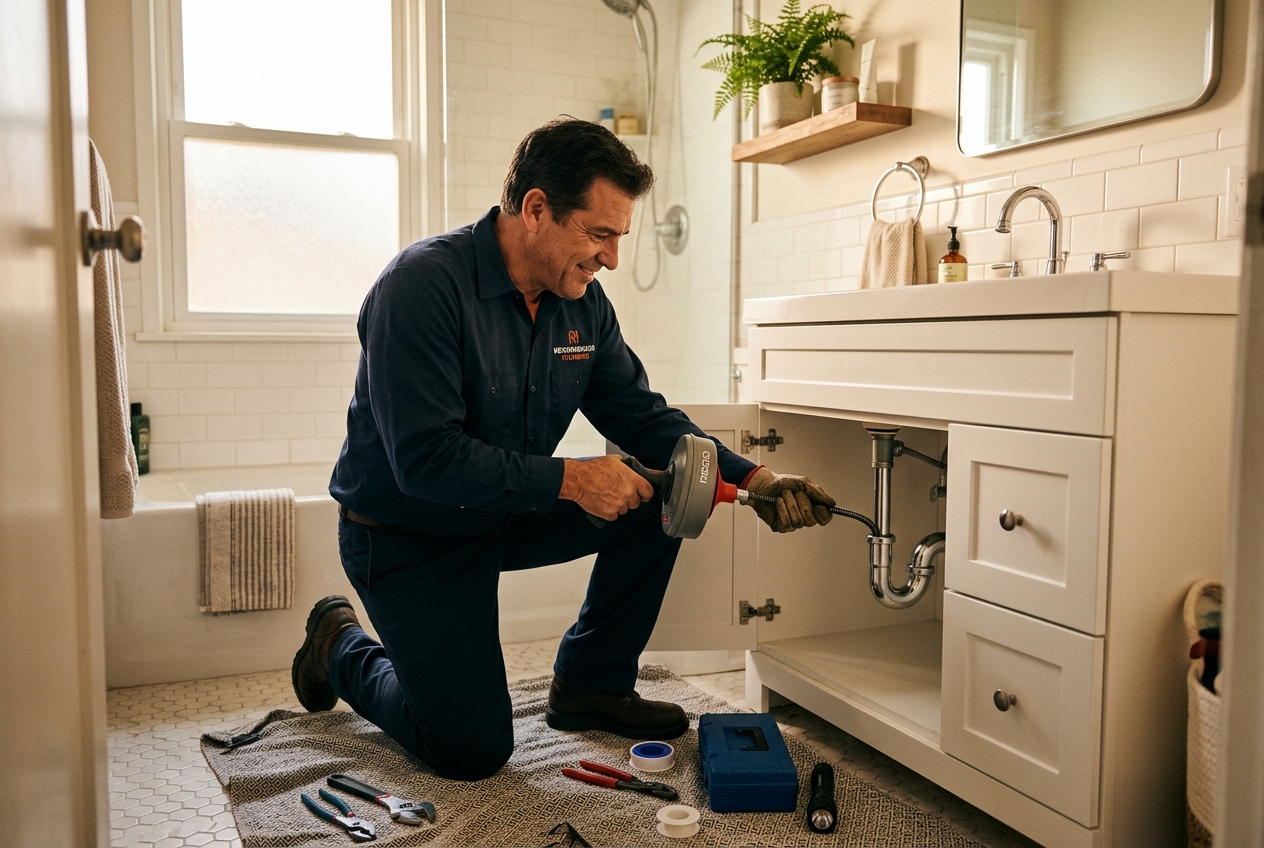
- Find your main water shutoff and make sure you can turn it off quickly if the pipe has cracked.
- Open the faucet on the frozen line so water can flow as the ice melts.
- Warm the pipe gently with a hair dryer, a space heater kept a safe distance away, or warm towels. Start near the faucet and work back toward the frozen section.
- Never use an open flame or a torch. It can damage the pipe and start a fire.
- Watch for leaks as it thaws. If you see water, shut off the main and call a plumber.
If a pipe bursts
Turn off the main water shutoff right away, shut off electricity to any area where water is near outlets or appliances, and call us at (610) 823-8018. We offer same-day service 8 AM to 8 PM, seven days a week, for burst pipe repair, leak detection and repiping. See our emergency plumbing guide for what to do while you wait.
Keep your heat running all winter
Because a heating breakdown is the fastest way to freeze an entire house, a fall or early-winter inspection of your furnace or boiler is one of the best ways to protect your plumbing. Kodiak Care Club members get two inspections a year, no service call fee, 10% off repairs and priority scheduling, with plans starting at $195 a year or $18 a month.
Frozen pipe FAQ
What temperature do pipes freeze at?
Water freezes at 32°F, but pipes in unheated or poorly insulated spaces are most at risk when outdoor temperatures drop into the low 20s or below for several hours.
Should I leave my faucets dripping overnight?
On the coldest nights, yes, especially faucets on exterior walls. A slow drip keeps water moving and relieves pressure in the line.
Do you handle frozen and burst pipes on weekends?
Yes. Kodiak Comfort is available 8 AM to 8 PM, seven days a week, across Berks County and within 30 miles of Wyomissing. Call (610) 823-8018.
Kodiak Comfort Heating Cooling Plumbing is a veteran-owned company in Wyomissing, PA, offering Residential HVAC & Plumbing and Commercial HVAC, Refrigeration & Plumbing.